
Safety First: The Best
Fishing Life Jackets & Essential Gear
In fishing, the most important piece of gear isn't your rod or your expensive electronics — it's the one that brings you home. Modern USCG-approved PFDs have changed everything: slim, cool, and packed with tackle storage. We've tested the latest to find the ones you'll actually wear.
The 3 Types of Fishing PFDs
Old-school life jackets were hot, bulky, and impossible to fish in. Modern gear has changed everything. Here's how to choose the right PFD for your fishing style.

The Gold Standard for Fishing
Type III foam vests are inherently buoyant — no pulling a cord, no CO2 cartridge to maintain. They keep you afloat automatically. Modern designs feature mesh backing, high-back cutouts for kayak seats, and dozens of pockets for pliers, lure boxes, and your VHF radio.
- Always-on buoyancy — no activation required
- High-back mesh designs fit kayak seats perfectly
- Multiple pockets replace a tackle vest
- Works for non-swimmers
- No maintenance required
- Bulkier than inflatables
- Can feel warm in summer heat
- Less freedom of movement for casting
Top Safety Gear Recommendations
From the best foam vest for kayak anglers to the wireless kill switch the law now requires — here are the DU Tech Team's top picks.

NRS Chinook Fishing PFD
The tackle vest that keeps you alive.
Combines safety with a tackle vest feel. Features dedicated spots for your VHF radio, pliers, and lure boxes. The mesh back panel keeps you cool and the high-back cutout fits virtually every kayak seat on the market.
DU Tech Note: The high-back mesh design solves the kayak seat problem completely — no more jacket riding up behind your head.
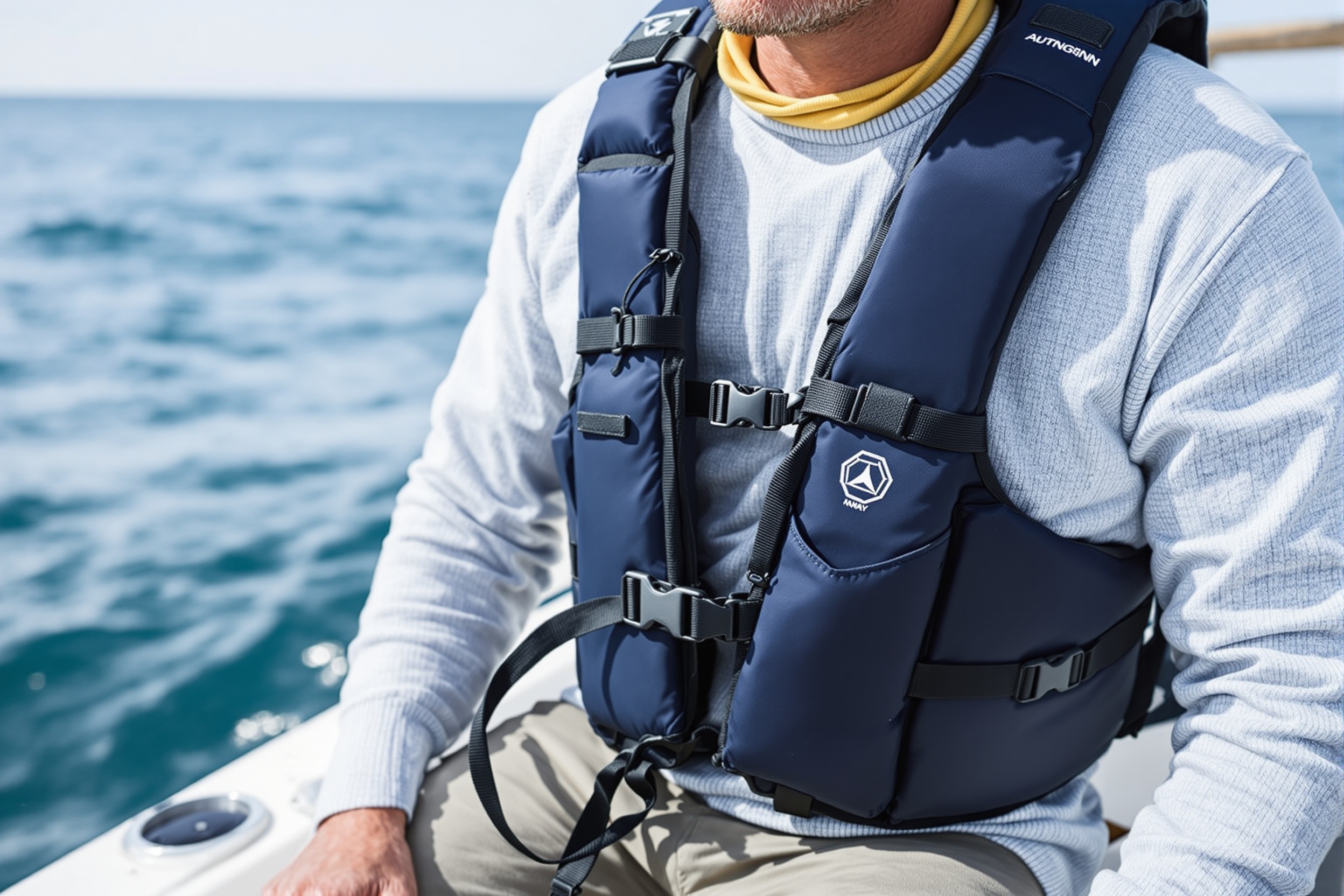
Onyx A-24 Automatic Inflatable
Ultra-slim. Forget it's even on.
Ultra-slim design that won't make you sweat in Florida or Texas heat. Automatically inflates on water contact — no pulling a cord. The go-to choice for tournament pros and open-water boaters who need full mobility for casting.
DU Tech Note: Not recommended for non-swimmers. Inspect the CO2 cartridge and re-arming kit annually — or after any deployment.
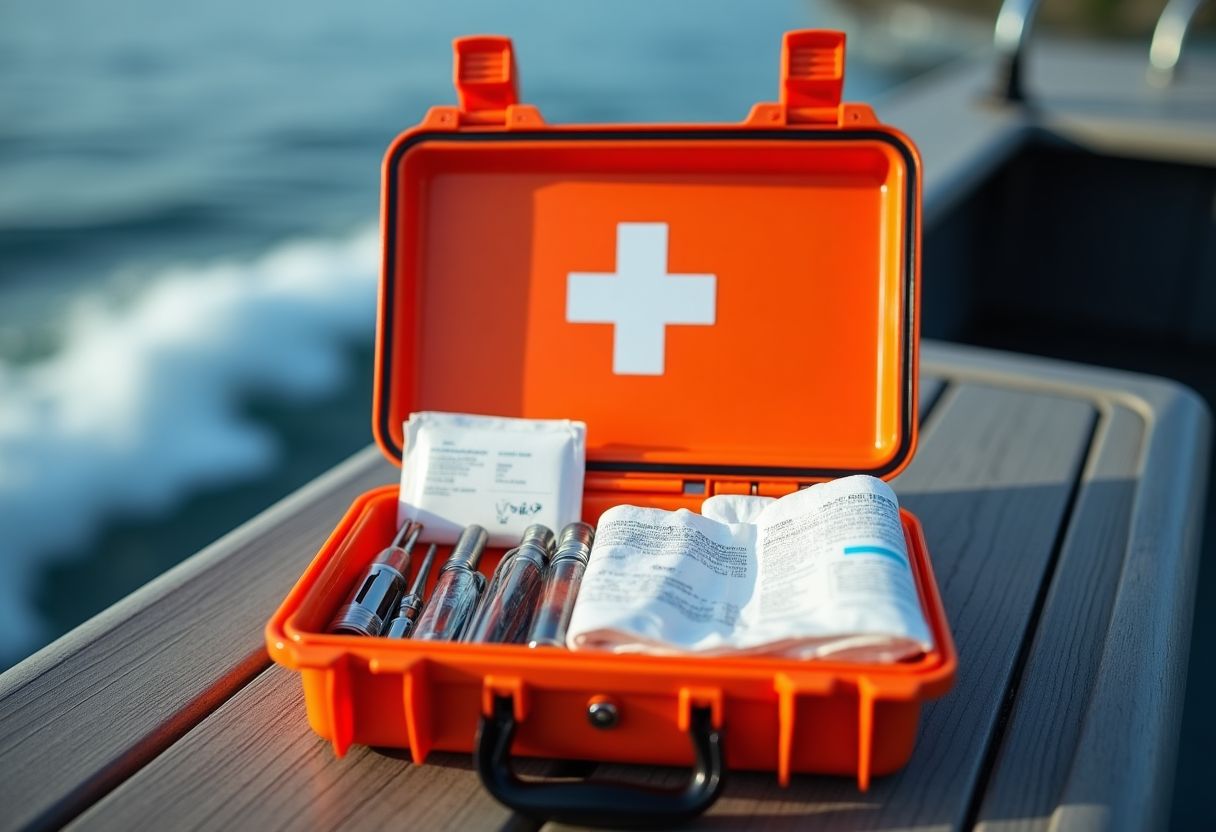
Waterproof Marine First Aid Kit
Because a stray hook can end a trip early.
A stray hook or a slip on the rocks can end a trip early — or worse. A waterproof marine first aid kit is non-negotiable. Look for one that includes hook removal tools, antiseptic wipes, waterproof bandages, and a CPR face shield.
DU Tech Note: Keep it in a dry bag or your kayak hatch — not loose in the boat where it can get soaked and become useless.
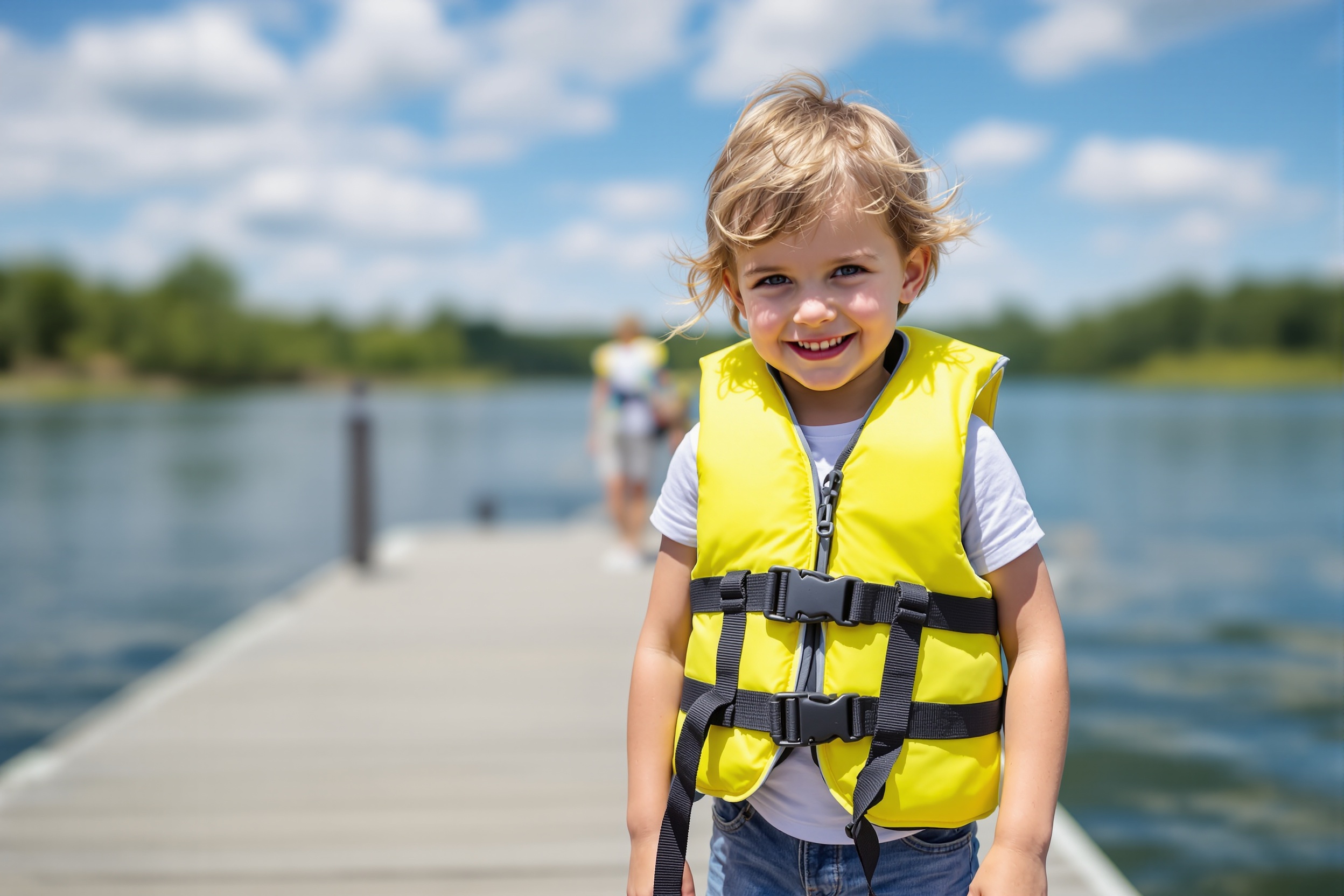
Stohlquist Fit Youth PFD
USCG Type III. Sized for young anglers.
Kids need a properly fitted PFD with a crotch strap to prevent the jacket from riding up over their head in the water. The Stohlquist Fit features a zippered front, adjustable chest and belly straps, and a grab handle for quick rescue.
DU Tech Note: The crotch strap is non-negotiable for children. Without it, a standard life jacket will float up over a child's head in the water.
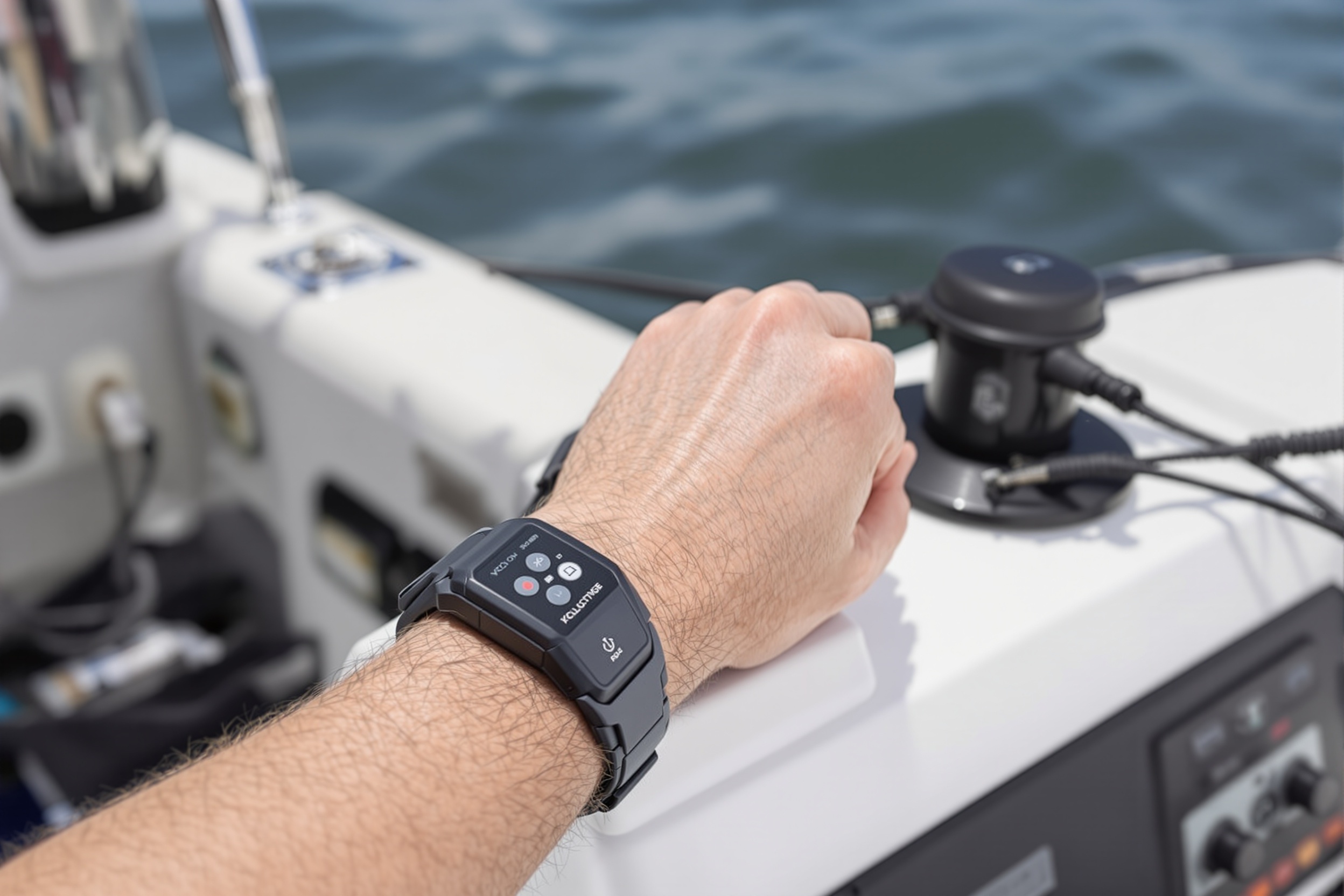
Wireless Engine Cut-Off Switch (ECOS)
US law now requires it. Here's the best one.
US law now requires an Engine Cut-Off Switch (ECOS) on most motorboats. A wireless kill switch allows you to move around the boat freely while still ensuring the engine stops if you go overboard. Far superior to the traditional tethered lanyard.
DU Tech Note: The traditional tethered lanyard restricts movement. A wireless ECOS gives you full freedom while maintaining the same life-saving protection.
The Crotch Strap, the Kill Switch & the Dry Run
The Crotch Strap Rule
If you're fishing in rough water or heavy current, a life jacket that isn't buckled tightly will simply float up around your ears while your head stays underwater. Our team always ensures a snug fit — and for children, a crotch strap is absolutely non-negotiable.
A loose PFD is almost as dangerous as no PFD. Fit it snug enough that you can't pull it up over your chin.
The Wireless Kill Switch
If you're operating a motorboat in the US, the law now requires the use of an Engine Cut-Off Switch (ECOS) link. We recommend a wireless kill-switch system — it allows you to move around the boat freely while still ensuring the engine stops if you happen to go overboard.
The traditional tethered lanyard restricts movement. A wireless ECOS is the modern solution — and it's now USCG compliant.
The "Dry Run" Tip
Before you ever need your inflatable PFD in an emergency, test it in a controlled environment — a pool or calm shallow water. Put it on, jump in, and pull the cord. You need to know exactly how it feels when it inflates, how to position yourself, and how to re-arm it afterward.
Most people who drown while wearing an inflatable PFD never pulled the cord. Practice in a pool first — it takes 30 seconds and could save your life.
Comfort vs. Safety: The Modern Solution
The old debate was "comfort vs. safety." Modern high-back mesh PFDs have ended that argument. The mesh backing allows airflow to prevent overheating, the high-back cutout eliminates the kayak seat conflict, and the multiple pockets replace your tackle vest entirely. You get maximum mobility, storage for your tools, and life-saving buoyancy — all in one package. There is no longer any excuse not to wear one.
Essential Safety Kit Checklist
Check off each item before every trip. The critical items (marked in red) are legally required or life-saving essentials.
One properly fitting, USCG-approved PFD per person. Children must wear theirs at all times on the water.
Required on boats 16 ft and longer. Keep it accessible — not buried under gear.
Required by US law on most motorboats. Wireless systems recommended for freedom of movement.
Required on coastal waters and the Great Lakes. Check expiration dates — flares expire after 42 months.
Include hook removal tools, antiseptic, waterproof bandages, and a CPR face shield.
VHF Channel 16 is the international distress channel. A waterproof VHF is far more reliable than a cell phone on the water.
Use 7:1 scope (7 ft of line per 1 ft of depth). A dragging anchor in current can be deadly.
Required between sunset and sunrise. A waterproof headlamp is the minimum for kayak anglers.
Tell someone where you're going, what time you'll be back, and what to do if you don't return. This is free and saves lives.
Required on all vessels. A pealess whistle attached to your PFD is the simplest solution.
Skin cancer is the most common cancer among anglers. Apply sunscreen every 2 hours on the water.
Dehydration and heat exhaustion are serious risks in summer. Drink before you feel thirsty.
State Safety Tool
Select your state to go directly to the official boating safety regulations page.
Safe fishing is smart fishing. Share your safety tips with the community on Instagram or Facebook — help keep fellow anglers safe.
Related Safety & Gear Guides
A PFD is just the start. Here are the other guides that complete a safe fishing setup.
Intex K1 Inflatable Kayak
Full setup guide and safety tips for the Intex Challenger K1 — pair with a high-back PFD.
California Ocean Safety Rules
California has specific ocean safety regulations for kayaks and small boats — know before you go.
Best Fishing Waders
Wading in current requires both waders and a PFD — here are the best breathable waders for 2026.
Aluminum Boats for Rough Water
If you're fishing rough water, your boat choice matters as much as your PFD. See our top picks.
Best Dry Pants for Kayak Fishing
Complete your kayak safety setup with waterproof dry pants — essential for cold-water kayak fishing.
Best Fishing Hats (UPF 50+)
Complete your safety kit with UPF 50+ sun protection — the most overlooked safety item on the water.