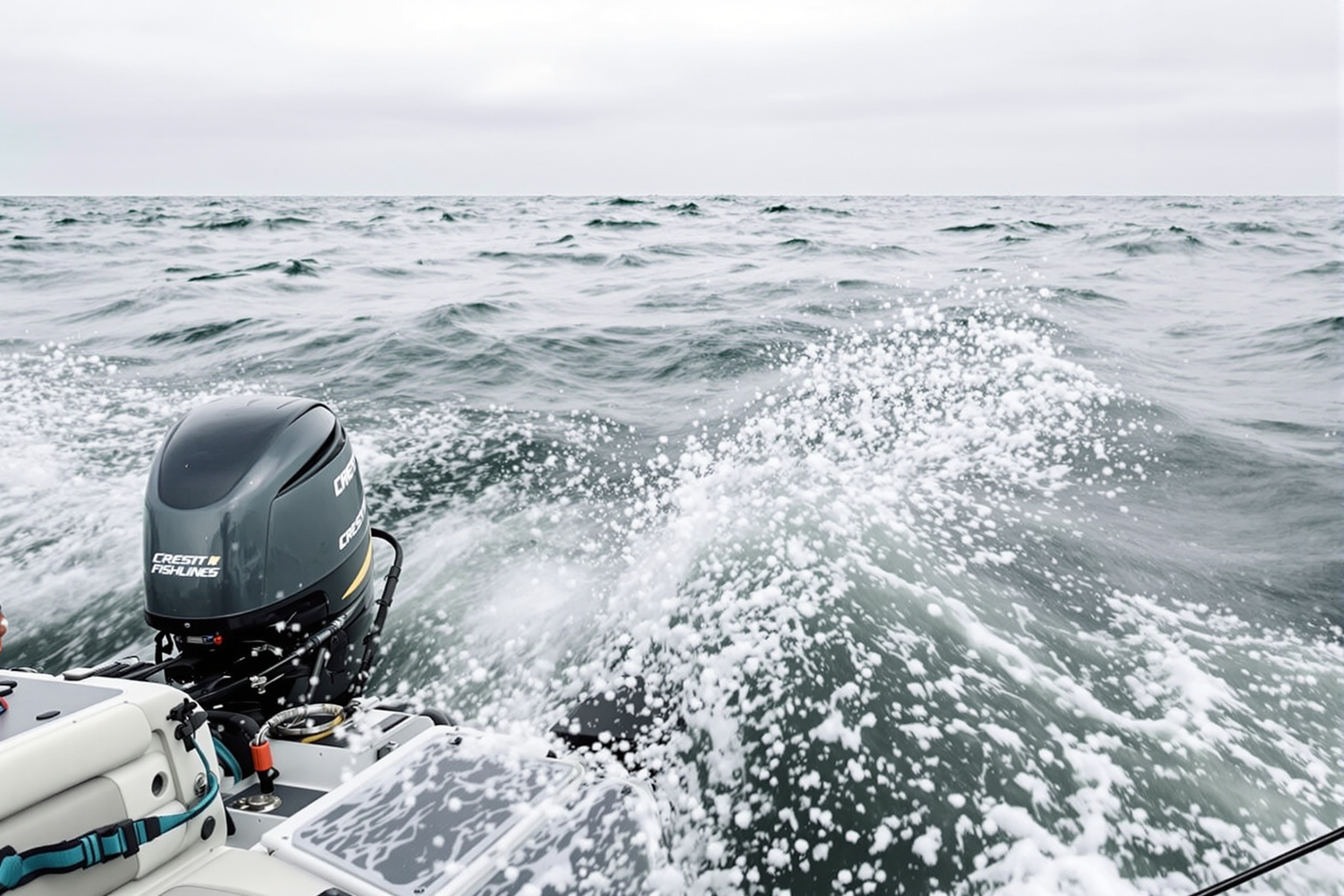
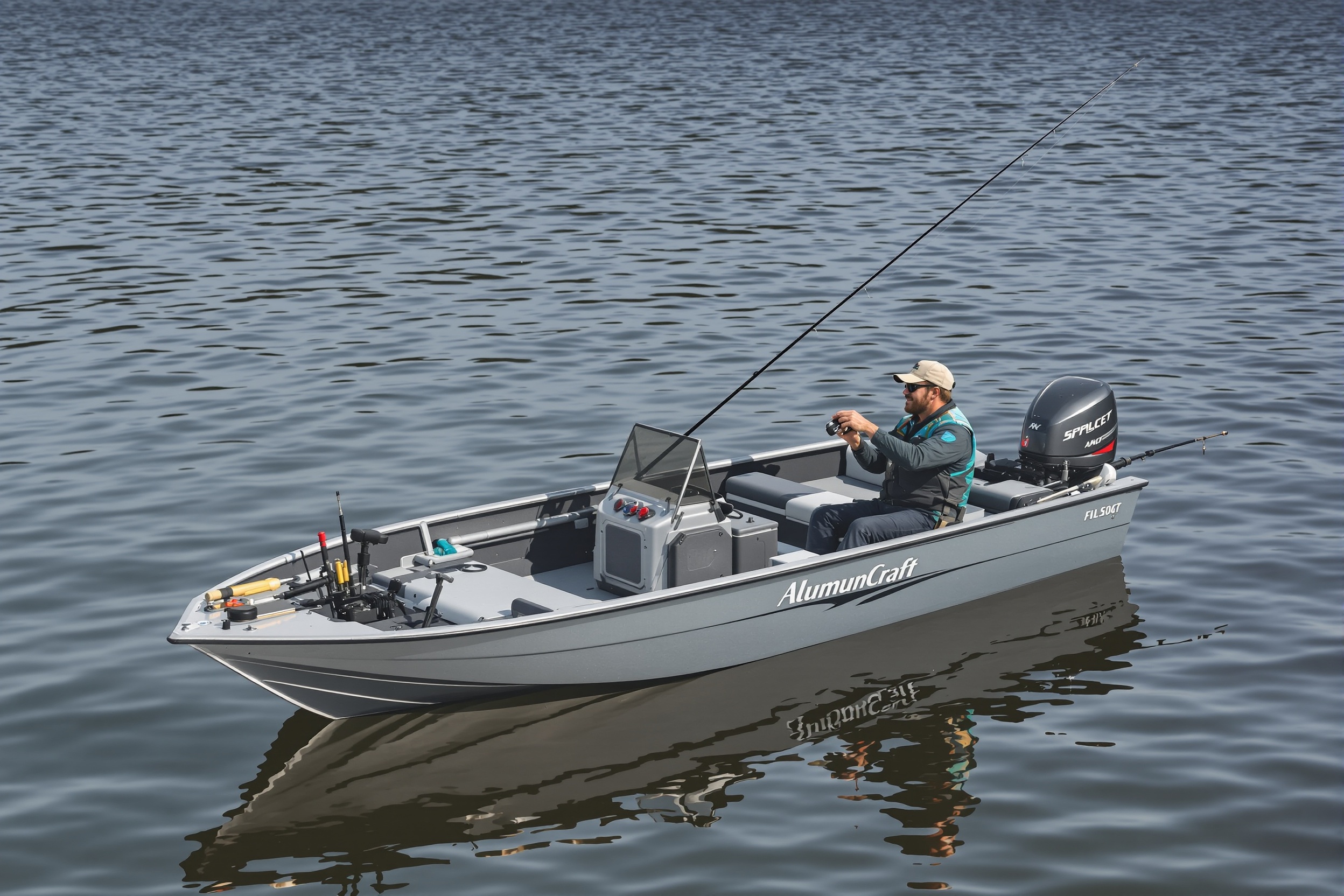
Most people think aluminum boats are only for calm ponds. They're wrong. If you pick the right hull design, a high-quality aluminum boat can handle the Great Lakes or coastal chop better than many fiberglass rigs. We're looking at the builds that keep you dry and, more importantly, keep you safe when the weather turns south.

There are four factors that separate an aluminum boat you can trust in a squall from one you're paddling back to shore after a bad decision. Here's how to read the specs before you buy.
The deadrise angle of a Deep-V hull — typically 20–24 degrees — acts like a knife cutting through oncoming waves rather than slapping over them. This means less pounding for the crew, less stress on the hull welds, and more control at speed in heavy chop. In rough water, hull geometry matters more than hull material.
On Lake Erie — notorious for 4–6 ft rollers in a summer squall — a 20-degree deep-V handles conditions that would send a flat-bottom boat back to the dock in minutes. The trade-off: you lose some interior room and fuel efficiency compared to a flat hull.
Freeboard is the distance between the waterline and the top edge of the hull (the gunwale). In rough water, you want maximum freeboard — high sides to keep spray out, waves from washing in, and passengers from going overboard. Most rough-water-ready aluminum boats run 24–30 inches of freeboard.
On the Chesapeake Bay, where wind-driven 3-footers can appear in 20 minutes, a boat with 28+ inches of freeboard keeps you dry and gives passengers a handhold. Low freeboard is fine for a calm river — it's dangerous on open water.
Welded aluminum construction is the clear winner for rough water. Riveted hulls flex slightly with each wave impact — which is fine for calm lakes — but in sustained rough water, those rivets work loose over time, eventually weeping water into the bilge. Welds are permanent, rigid, and don't move.
That said, a properly maintained riveted hull is still a solid boat. The key word is 'maintained.' Inspect every rivet on a riveted hull before a season on rough water, and carry marine sealant on board. On a welded boat, you're looking for corrosion at the welds — easiest spot to miss and most likely to fail.
Aluminum hull gauge is measured in thousandths of an inch. For rough water, you want a minimum of .100" (100 gauge) on the bottom hull and .090" on the sides. Budget boats cut to .080" or less — these dent easily on rocky shores and fatigue-crack faster in constant wave pounding.
Premium rough-water aluminum boats from brands like Lund, Crestliner, and Alumacraft run .125" bottom gauge. That extra thickness adds weight but turns a dent into a ding — and the structural difference on a rocky Columbia River shoreline is night and day.
Fiberglass has one real advantage: it absorbs wave impact better and gives a slightly softer ride. But for most USA anglers fishing rocky shores, shallow rivers, or dragging onto gravel beaches, aluminum wins every time.

Welded hull construction — no rivets to work loose in rough water vibration.
Jon Boat, Mod-V, Deep-V, Semi-V — what's the real difference on a rough day? This table gives you the honest answer.
| Hull Type | Rough Water | Stability | Speed | Fuel Eff. | Price Range | Verdict |
|---|---|---|---|---|---|---|
Jon Boat (Flat Bottom) | $1,500–$8,000 | Flat-water only | ||||
Mod-V (Modified V) | $5,000–$18,000 | Good all-rounder | ||||
Top PickDeep-V (18–22° Deadrise) | $12,000–$45,000 | Best for rough water | ||||
Semi-V (15–17° Deadrise) | $6,000–$22,000 | Decent compromise |
Best for: Calm ponds, shallow rivers, marshes
Best for: Rivers, protected bays, calm to moderate lakes
Best for: Great Lakes, Chesapeake Bay, Columbia River, coastal bays — any rough water
Best for: Lakes, protected inlets, moderate chop
The Rough Water rating above assumes the same driver skill level. An experienced operator in a Mod-V can outperform a novice in a Deep-V. Hull design gives you the tool — technique determines the outcome. Always quarter the waves at a 45° angle, never take big chop head-on or directly from the stern.
The US Coast Guard estimates that 75% of boating fatalities involve vessels under 21 feet — the exact size most aluminum fishing boats fall into. Run this checklist before every rough-water outing. Click to check off items.
12 items remaining before you're rough-water ready.

Essential for rough water movement — auto-inflates on submersion.
Protect your hull when the dock gets jumpy in rough conditions.
Because a 'dry ride' is never 100% guaranteed — protect your phone and GPS.
These aren't paid placements. These are the aluminum boats our team would put their own family in on a windy day on the Great Lakes.

Great Lakes, large reservoirs, coastal bays

Columbia River, Chesapeake Bay, Great Lakes

Large lakes, protected coastal bays, rivers
These tips come from actual time on the water in three of the most challenging fishing environments in the USA. They are not from a manual.
The Great Lakes are unpredictable — and we mean that literally. A flat-calm morning on Lake Erie can become 4-foot rollers by noon. We never leave the dock on the Great Lakes without checking the NOAA 24-hour marine forecast AND the wind forecast on a second app. If sustained winds exceed 15 mph, we wait. An aluminum Deep-V handles it, but not every passenger does.
Quartering the waves at 45° is the single most important rough-water skill. Never take Lake Erie rollers on the beam (side) — that's how boats capsize.
The Chesapeake's shallow draft and wind-driven chop make it brutal for flat-bottom boats. The Bay can go from 1-foot ripples to 3-foot whitecaps in under an hour when a front comes through. We run a 20° deep-V with 28" freeboard minimum on the Chesapeake and have a strict 'no departure after 2pm in summer' rule — afternoon thunderstorm season is serious.
The Chesapeake is well-marked but currents can push you off anchor faster than expected. Always set two anchors in a 'V' configuration when you're fishing in open Bay conditions.
The Columbia River Gorge creates venturi wind effects that accelerate winds to 35–50 mph without warning. Aluminum boats take a beating on the Columbia when the gorge winds fire up. The key here isn't just the hull — it's knowing your escape routes to sheltered coves before you're a mile downriver with no way to turn back upwind.
Rocky Columbia River banks mean aluminum is essential — fiberglass on those basalt shores is a repair bill waiting to happen. We keep .100" minimum gauge on any boat we recommend for the Columbia.
It's not just the boat — it's the driver. On the Great Lakes or the Columbia River, remember: taking waves at a 45-degree angle prevents nose-diving and rolling. An aluminum boat is light, which makes it fast, but you'll feel the bounce more than in a heavy glass boat.

Share your boat pics, close calls, and trophy catches with the FishingGears community on Facebook.
High-altitude Colorado reservoirs see strong afternoon wind chop. Our state guide covers the best lakes and launch ramps suitable for aluminum boats.
Florida backcountry and coastal bay fishing often means unpredictable wind and chop. See our Florida-specific water conditions and boat ramp guide.
Crucial for rough water safety — know exactly where you are when visibility drops and channels look the same. A GPS is not optional on the Great Lakes.
Not ready for a full aluminum boat? Our kayak guide covers stable, rough-water capable kayaks for anglers who want to start smaller.
We have 20+ years of combined experience on USA waters from the Great Lakes to the Columbia River. Our boat recommendations come from real rough-water experience — not manufacturer specs. Every Amazon link uses tag orgfg-20 which helps fund our continued testing at no cost to you.
The bass are biting in Florida right now.
Spring bass spawn is on. Trick worms, creature baits, and bed-fishing tactics are working nationwide.