See Beneath the Surface: How to Choose the Right Fish Finder.
Walk into any tackle shop and you'll see fish finders that cost more than a used truck — with fancy names like "Mega-Side-Imaging" and "Live-Real-Time-Sonar." It's enough to make any angler's head spin. But here's the truth: you don't need the most expensive unit to find the honey hole. You just need to know what you're looking at.
The 3 Things You Actually Need to Care About
Every fish finder company will try to sell you on a dozen features. The truth? Three things determine whether a unit actually helps you catch more fish. Everything else is marketing.

The "View" — Down vs. Side
Down-View is like a flashlight under your boat. Side-View is like car headlights — it shows you what's to the left and right.
Best for ponds, rivers, basic lake fishing. Shows depth and fish directly below the boat.
Reveals fish hiding near docks, fallen trees, ledges. Essential for big-water bass and walleye fishing.
Real-time view of fish moving in 3D. Amazing technology — but overkill for most anglers and costs $1,500+.
"The biggest mistake we see is people thinking a fish finder will show them a movie of the fish eating their bait. Most units show 'arches' or 'dots.' Learn to read structure first. If you find a submerged tree or a big rock pile on your screen, the fish are almost certainly there."
3 Questions. Your Perfect Fish Finder.
Skip the research rabbit hole. Answer 3 quick questions and we'll tell you exactly which type of fish finder to buy — in plain English.
What are you fishing from?
This determines screen size and battery requirements
Recommendations by Boat Type & Sonar Type
Here's exactly what the DU Tech Team recommends depending on how you fish — and a plain-English breakdown of the three sonar types.
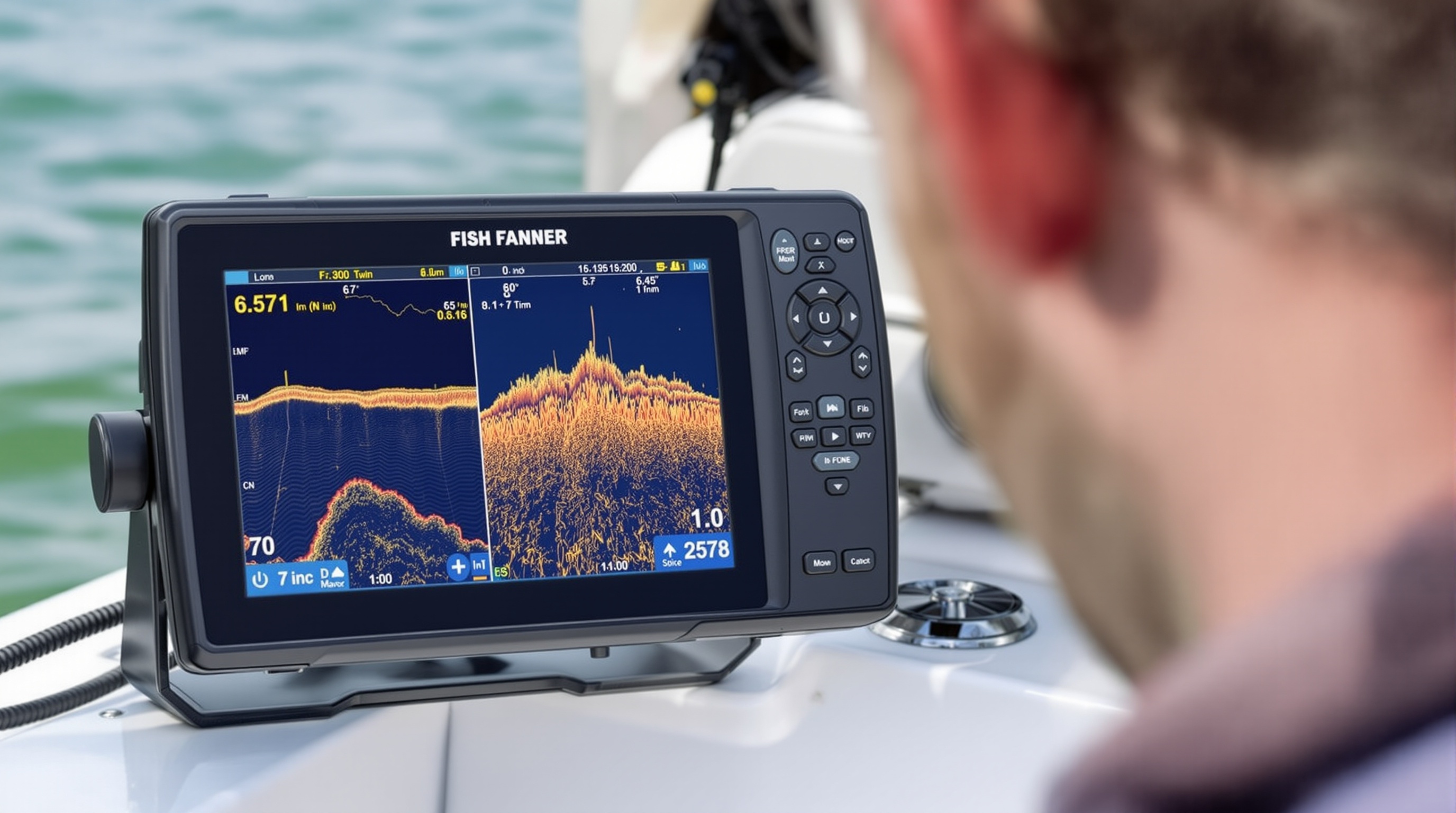
The All-Rounder for Bass & Walleye
A solid 7-inch screen with both down and side views. The sweet spot for most lake fishing in the US — finds structure fast and holds its value for years.
Always look for IPX7 rating — it means the unit survived a 30-minute soak test at 1 meter deep. If you're in Florida heat or Colorado cold, a non-rated unit will fail within a season.
It's Not a Magic TV.
The most common fish finder mistake — and how to actually use one to catch more fish.
"The biggest mistake we see is people thinking a fish finder will show them a movie of the fish eating their bait. Most units show 'arches' or 'dots.' Our tip? Learn to read 'structure' first. If you find a submerged tree or a big rock pile on your screen, the fish are almost certainly there. Also, if you're fishing in the Florida heat or Colorado cold, make sure your unit is 'IPX7 Waterproof' — meaning it can handle a splash without dying."
A brush pile at 14 feet showing no fish arches right now will hold 10 bass at dawn. Mark every piece of structure you find — return at the right time.
Zoom into the bottom 10 feet of your display. Fish holding tight to bottom structure are often invisible until you zoom in — a game-changing setting most anglers never touch.
At high speed, sonar arches compress into tiny dots that are easy to miss. Idle speed when scanning new water — you'll see 3x more detail in the sonar return.
Auto mode often misses fish holding near bottom. Set sensitivity to 80–85% manually and you'll start seeing arches that auto mode suppresses as "noise."
Want a dedicated GPS that works on land and water? Our full guide covers the best handheld units for anglers.
Choosing a fish finder? First make sure your kayak can handle the weight and mount. Our full review.
Side-imaging fish finders are a game-changer in Florida's shallow flats. Here's where to use one.
Crappie anglers use fish finders to find brush piles. Pair the right reel with the right sonar setup.
The four major fish finder brands the DU Tech Team trusts — each with a different sweet spot.