Fishing in Florida: The Local's Guide to Gear and Spots.
Florida is two entirely different fisheries in one state. The bass lakes of Central Florida are world-class, and the saltwater flats down south are legendary. Don't show up with the wrong gear — the salt air will destroy freshwater tackle in a single trip.
Florida at a Glance
Separate freshwater & saltwater licenses required. Saltwater needed for any bay, estuary, or ocean fishing.
Get Your License →The Best Spots in Florida
The Florida Keys
Saltwater Paradise
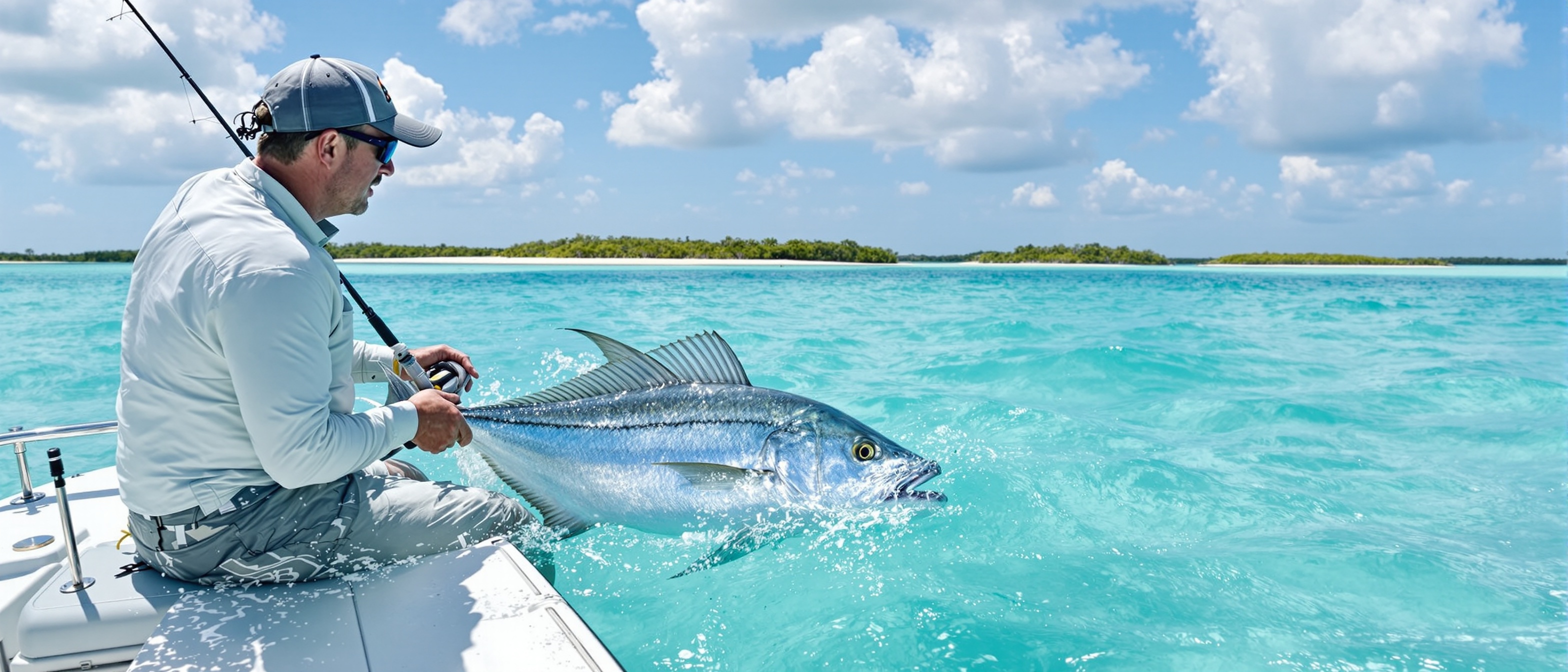
The Keys are the crown jewel of Florida saltwater fishing. Tarpon, bonefish, and permit roam the shallow flats. You're fishing skinny water here — 1 to 3 feet — and the fish can see you just as well as you can see them. Stealth is everything.
Crystal-clear, shallow saltwater flats. Tidal current-dependent — check tide charts before every trip. Water temps stay warm year-round (75–85°F).
- Islamorada Flats
- Big Pine Key Backcountry
- Marathon Bridges
- Key West Wrecks
Tarpon season peaks May–July in the Keys. Get there early — by 7am the flats are already crowded with guides. Use live crabs or big white flies near the bridges on incoming tide. And for the love of everything, go quiet on your boat approach.
Central Florida Lakes
Bass Capital of the World
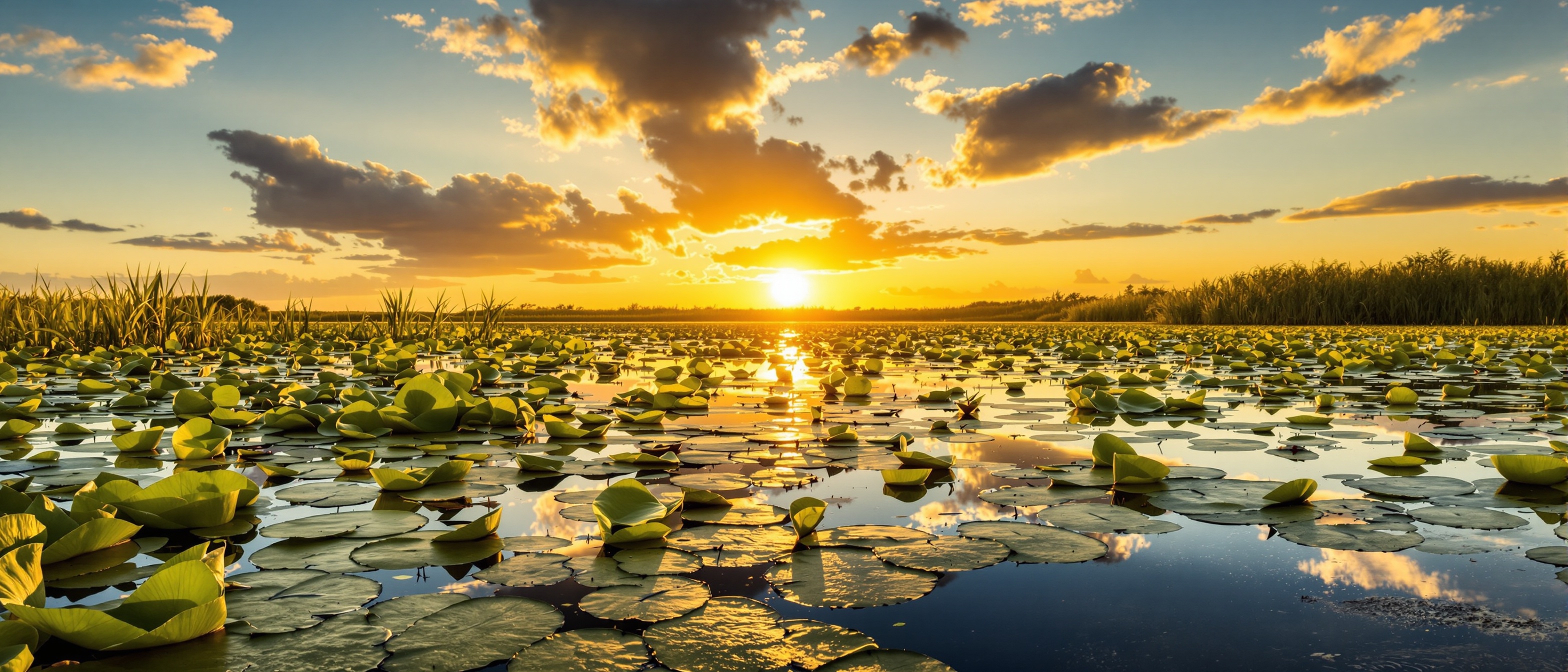
Lake Okeechobee, the Harris Chain, and dozens of Central Florida lakes hold some of the largest largemouth bass on the planet. The Florida strain largemouth grows significantly bigger than its northern cousins. A 10-lb bass here is a real possibility — not just a fish story.
Murky to stained freshwater. Heavy lily pad and hydrilla cover. Water temps stay warm (72–85°F) nearly year-round, which drives aggressive feeding behavior.
- Lake Okeechobee
- Harris Chain of Lakes
- Kissimmee Chain
- Headwaters of the St. Johns River
Okeechobee is best November through March when bass move shallow to spawn. Use big shiners under a float near the grass edges at first light. The Florida strain bass are notorious for hitting right at the edge of vegetation — not in it, not in open water. Right on that edge.
Northeast Florida
The St. Johns River Corridor
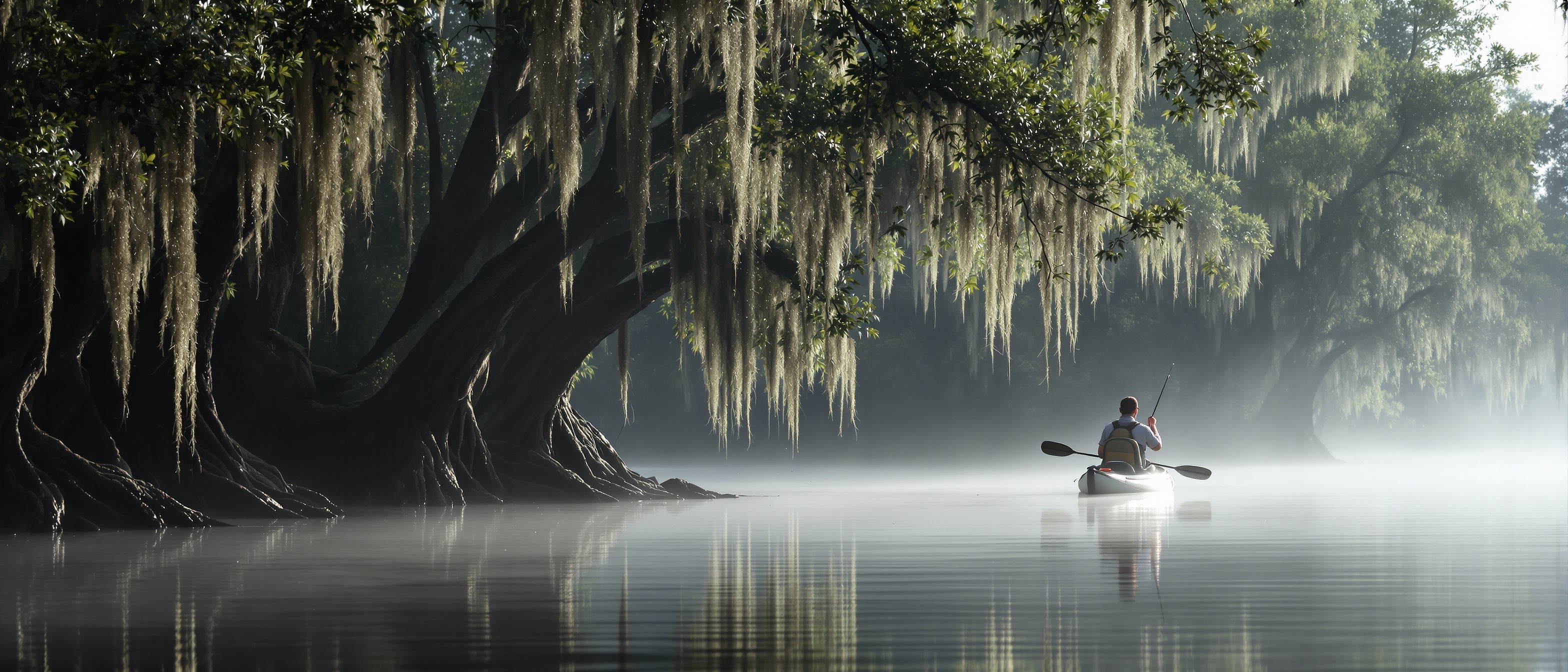
The St. Johns River is one of the few rivers in North America that flows north. It's massive, slow-moving, and absolutely stuffed with bass, catfish, and in the lower reaches, even snook and redfish where it meets the ocean near Jacksonville.
Dark, tannin-stained freshwater in the upper reaches. Becomes brackish near Jacksonville. Slow current, heavy aquatic vegetation all year.
- Lake George
- Palatka Bridge Area
- Welaka Springs
- Lake Monroe
The St. Johns River bass bite is best in the cooler months (November–February). The dark water means bass rely more on vibration than sight — chatterbaits, spinnerbaits, and rattling crankbaits consistently outperform soft plastics in these conditions.
The Gulf Coast Panhandle
Emerald Waters & Pier Fishing
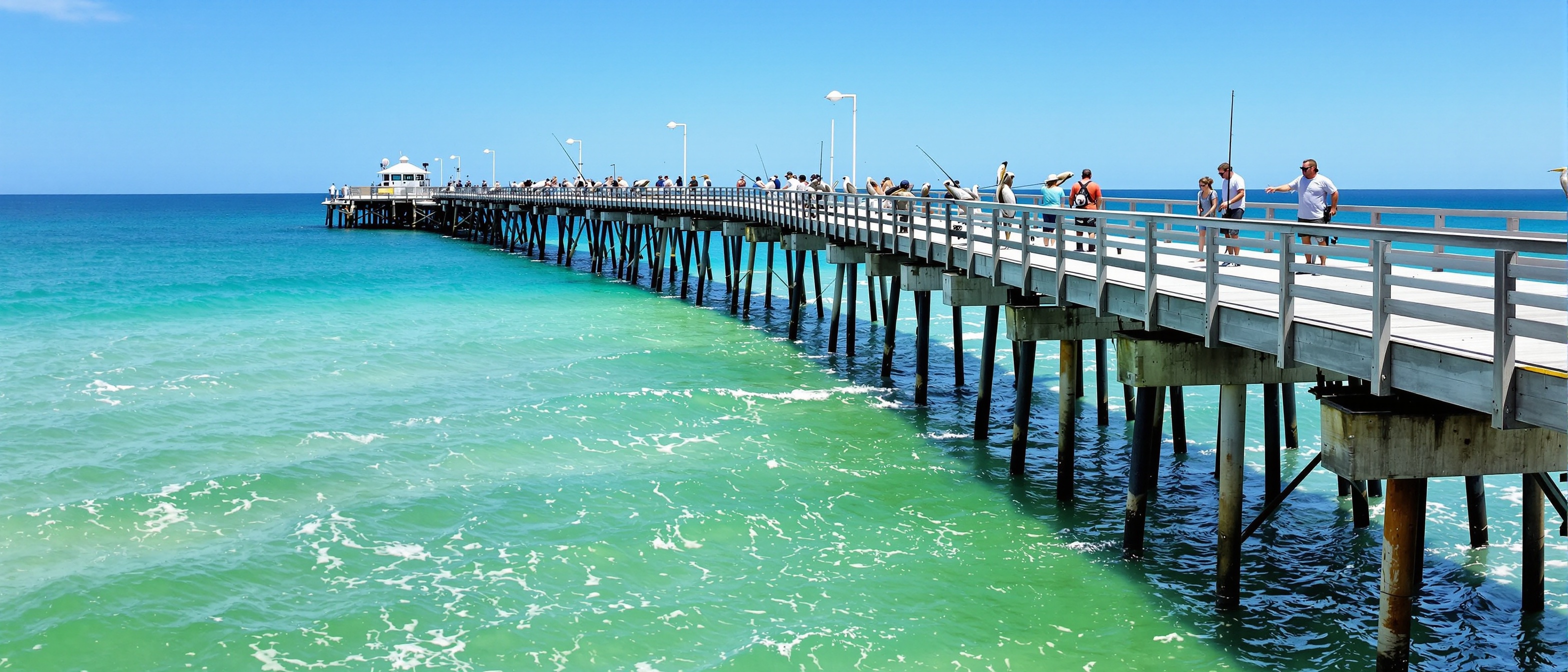
Destin and the Panhandle offer some of the clearest water on the Gulf Coast, and the pier fishing scene is massive. King mackerel, cobia, and redfish are the main targets. Pier fishing here is a legitimate sport — people drive from 5 states away for the Destin Fishing Rodeo.
Emerald-green, relatively clear Gulf water. Deeper than the Keys flats. Seasonal species migrations make timing critical.
- Destin Harbor
- Pensacola Beach Pier
- Fort Walton Beach Jetties
- Navarre Beach Pier
Cobia follow manta rays and large stingrays on the Gulf flats in spring (March–May). Spot a ray from the pier, cast a live eel or big jig 10 feet ahead of it, and you might be fighting a 50-lb cobia. Keep your eyes up, not just down at the water.
The Gear You'll Need in Florida
Every state fishes differently. Here's what actually belongs in your tackle bag for Florida water.
Common Questions for Florida Anglers
No — shore fishing in Florida is excellent. Dozens of piers line the Gulf and Atlantic coasts, and many Central Florida lakes have public bank access. However, having a kayak or small boat opens up the backwater fishing that makes Florida truly special.
On This Page
Tarpon season peaks May–July in the Keys. Get there early — by 7am the flats are already crowded with guides. Use live crabs or big white flies near the bridges on incoming tide. And for the love of everything, go quiet on your boat approach.