Fill the Cooler: The Best Crappie Fishing Baits.
Crappie are arguably the best-tasting freshwater fish in America — but they can be incredibly picky. One day they want a live minnow at a snail's pace; the next, only a bright chartreuse jig hopped through a brush pile works. To be a consistent slab hunter, you need a diverse tackle box.
The Crappie Bait Showdown
Every serious slab hunter carries both live bait and artificials. Here's when to reach for each one — and which specific products the DU Tech Team runs.
Soft Plastic Jigs
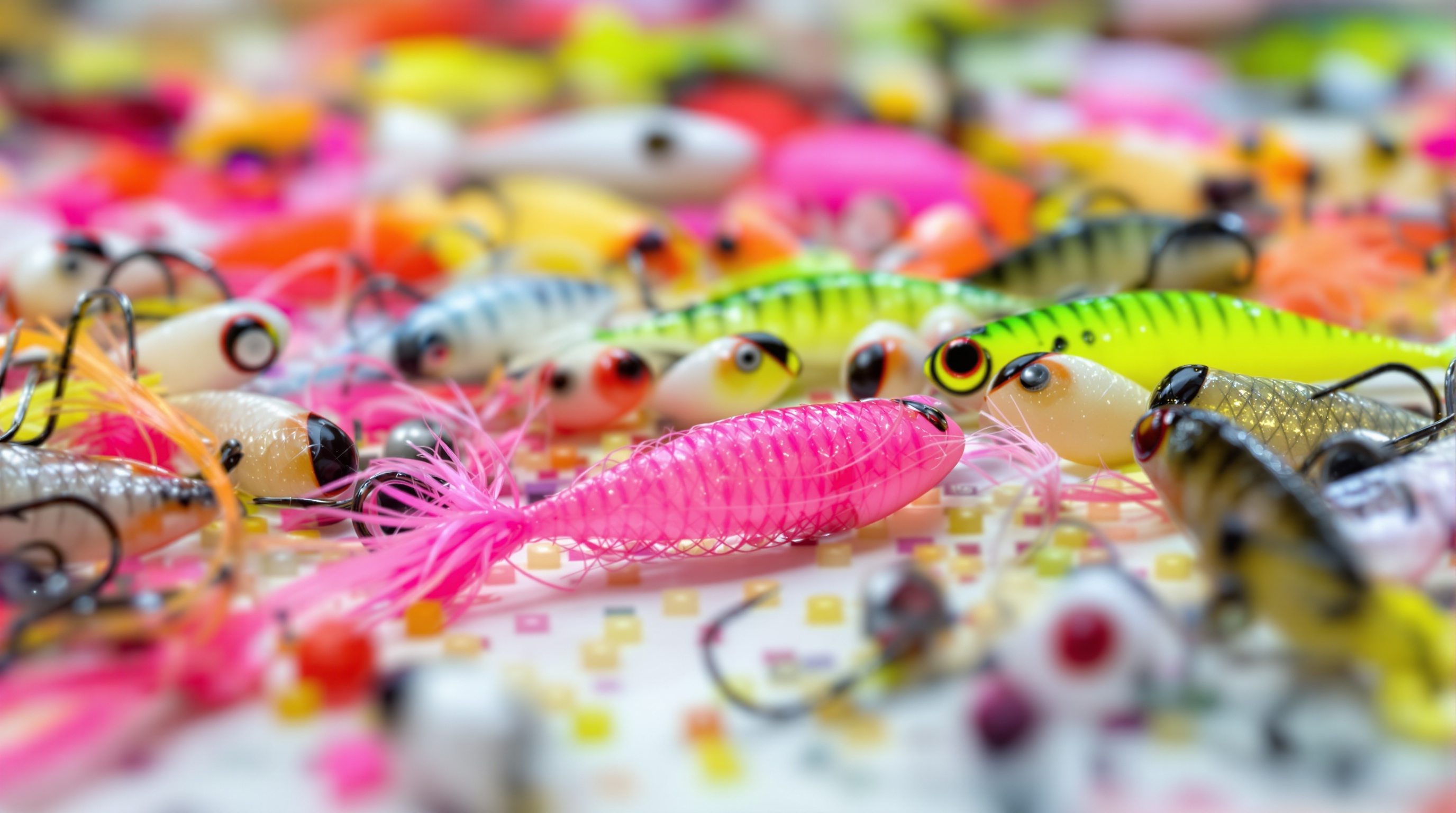
Soft plastic jigs let you cover more water in less time and stay in the strike zone longer during vertical jigging. You don't have to keep them alive, they don't die in the August heat, and the color variety means you can adapt to any water condition instantly by just swapping tails on the same jig head.
- Water above 60°F
- Spring spawn — fish are aggressive
- Stained or murky water
- Brush pile vertical jigging
Thread a 1.5" soft plastic tail onto a 1/16 oz jig head. Lower straight down into brush. Hop it with tiny 2-inch lifts. Wait 3 seconds between each hop.
- Covers water fast
- Endless color selection
- Stays in strike zone with vertical jigging
- Never dies or needs care
- Less effective in cold water
- Short tail life (crappie bite them off)
- Need to match color to water conditions
- Learning curve on jigging cadence
Match Your Bait Color to the Water
Wrong color = ignored bait. Right color = limit. Here's the DU Tech Team's exact color guide for every water condition you'll encounter.
Chartreuse stands out in stained green water like a neon sign. It's the #1 color for Southern US crappie lakes all year. Add a small chartreuse tube jig on a 1/16 oz head and you have a setup that works from Kentucky to Mississippi.
| Water Condition | Recommended Colors | Bait Type | Jig Weight |
|---|---|---|---|
Crystal Clear Visibility 5+ feet | Natural / Shad | Small minnows | 1/32 oz – 1/16 oz |
Stained (Green) Visibility 1–4 feet | Chartreuse | Chartreuse curly tails | 1/16 oz – 1/8 oz |
Muddy (Brown) Visibility under 12 inches | Black / Chartreuse | Scented soft plastics | 1/8 oz – 1/4 oz |
Click the current month to see the best bait strategy right now.
Peak jig season. Crappie guard nests in shallow water. Cast past dock posts, fallen trees, and brush piles. They're aggressive.
The Chartreuse Rule & The "Thump."
These are the two insights that take crappie anglers from occasional catches to consistent limits.
If we could only pick one color for crappie, it's chartreuse. Why? Because it stands out in almost every water type in the US — stained, murky, or even clear on overcast days. Start with chartreuse in any unfamiliar lake. Once you start catching fish, dial in from there.
Crappie don't always slam the bait. When you're vertical jigging in brush, a snag feels like dead weight — you just can't move the jig. A crappie bite feels like a tiny "thump" or "tick," or your line suddenly goes slack. They swim up with the bait.
Tiny tap, line goes slack, float twitches. Set it immediately.
Jig just stops. Can't move up or down. Pull at an angle to free it.
Crappie are structure fish. 80% of the fish live in 20% of the water — near brush piles, dock pilings, fallen timber, and submerged stumps. If you're not fishing near structure, you're fishing in a desert.
Instead of a fixed float, use a sliding float with a bobber stop so you can change depth quickly without cutting the line. Set it 1–2 feet above where your fish finder shows fish stacked.
In summer, a submersible green LED light dropped over the side of your boat at night is a crappie magnet. Bugs gather at the light → minnows eat bugs → crappie eat minnows. You're essentially building an instant brush pile.
A dead minnow catches nothing but turtles. Check these before you launch.
Complete the setup — ultralight spinning rods and 12-ft jig poles for slabs.
The right reel makes vertical jigging effortless. Our full 2026 guide.
Catch your own minnow bait for free with a soda bottle.
Light-wire crappie hooks need specific knots. Clinch or Palomar.