Hooking the Monsters: The Best Catfish Hooks for 2026.
Catfish don't nibble — they crush. If your hook isn't up to the task, it'll end up straightened or spat out before you grab the rod. Whether you're chasing eating-size Channel Cats or hunting trophy Blues, your hook choice is the most critical link in your setup.
Circle, J-Hook, or Treble — Which One Do You Need?
Pick the wrong style and you'll miss fish or ruin the fight. Each one has a specific job. Here's the breakdown.

Circle hooks are designed to rotate and set themselves in the corner of the fish's mouth automatically. When a Blue Cat picks up the bait and starts moving, the hook rolls until the point catches — no massive hook-set required. This is the go-to choice for anglers who use rod holders and want to fish multiple lines at once.
Fish picks up bait → pulls line tight → hook rotates → point catches corner of mouth → hook is set. You just reel.
- Self-hooking — no strike needed
- Hooks corner of mouth (easy release)
- Excellent for rod holders
- Withstands heavy runs
- Don't work well with stink bait
- Must NOT jerk the rod on the bite
Match Your Hook to the Fish
Channel, Blue, and Flathead cats need completely different hooks. Click a species to see the exact setup the DU Tech Team runs.
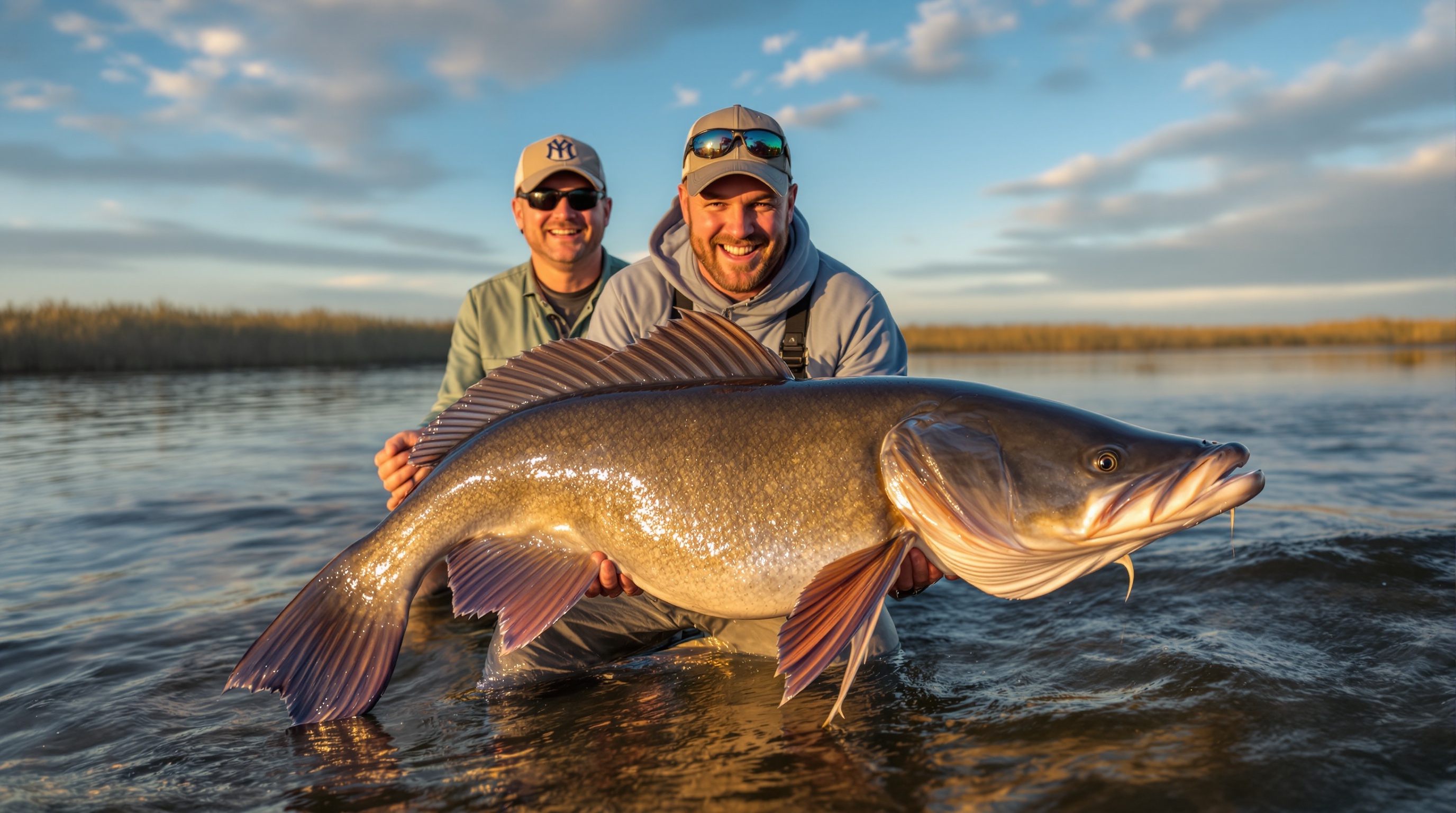
Blue cats school on main river channel drops. Use a heavy sinker to pin cut shad on the bottom in 15–30 ft.
| Catfish Type | Recommended Hook | Recommended Size | Best Bait | Set Method |
|---|---|---|---|---|
Channel Catfish | Baitholder / Treble | #2 to 2/0 | Stink bait, chicken liver, nightcrawlers | Power-Set |
Blue Catfish | Circle Hook | 5/0 to 8/0 | Cut Shad / Fresh Bluegill halves | Let the rod load |
Flathead Catfish | Heavy J-Hook | 6/0 to 10/0 | Live green sunfish / Live bullhead | Power-Set |
Click your bait to instantly see which hook and size to use.
Don't Let the Monster Get Away.
These are the hook tips that separate anglers who consistently land trophy cats from those who go home with broken lines and stories.
The biggest mistake we see with new catfish anglers is trying to 'cross the fish's eyes' with a massive hook-set when using circle hooks. If you do that, you'll pull the hook right out of their mouth. With circle hooks: let the fish run, let the rod load up under its own weight, then slowly reel. The hook has already done its job.
Always check your hook point after it contacts a rock or a hard bottom. Press the point lightly against your fingernail. A sharp hook will 'stick' and not slide. A dull hook will skate right off. If it skates — sharpen it with a hook file or swap it. A dull hook is the second most common reason for missed catfish (a bad cast is first).
For channel cats, rub a cut piece of shad across your baitholder shank before putting the liver on. The oils from the shad get into the barbs and the metal itself, creating an extra scent trail that drifts in the current independently of your main bait. Old river guides taught us this one.
In river current, stink bait and chicken liver dissolve and wash off faster than you think. Re-bait aggressively — every 20 minutes in fast current, 30 in slow. A bare hook sitting on the bottom is catching nothing. Many beginners sit for 2 hours on a hook that lost its bait after 25 minutes.
Blue cats and flatheads feed most aggressively at night — especially in the summer. Focus on main river channel bends and edges of deep holes in the 10–25 ft range. A heavy 3–5 oz slip sinker keeps your cut shad right on the bottom where the big blues are staging.
Heavy-action rods for channel, blue, and flathead — bank and boat tested.
Muddy water, rising rivers — learn exactly where the big cats go after a storm.
A sharp hook is useless if the knot fails. The Palomar for braid, Clinch for mono.
For big Blues, you need 50+ lb braid. Our full line guide.
Test every hook before casting. After hitting rocks or hard bottom, test again. Always keep a hook file in your tackle box.