How to Fish for Salmon from Shore: The Simple Way to Land Pacific and Great Lakes Salmon Without a Boat.
Most beginners stand in the wrong spot, use gear that's too light, and don't know how to drift their bait naturally. In this guide, the DU Tech Team breaks down the exact techniques we use on the Sacramento River, Pacific Northwest rivers, and Great Lakes tributaries.
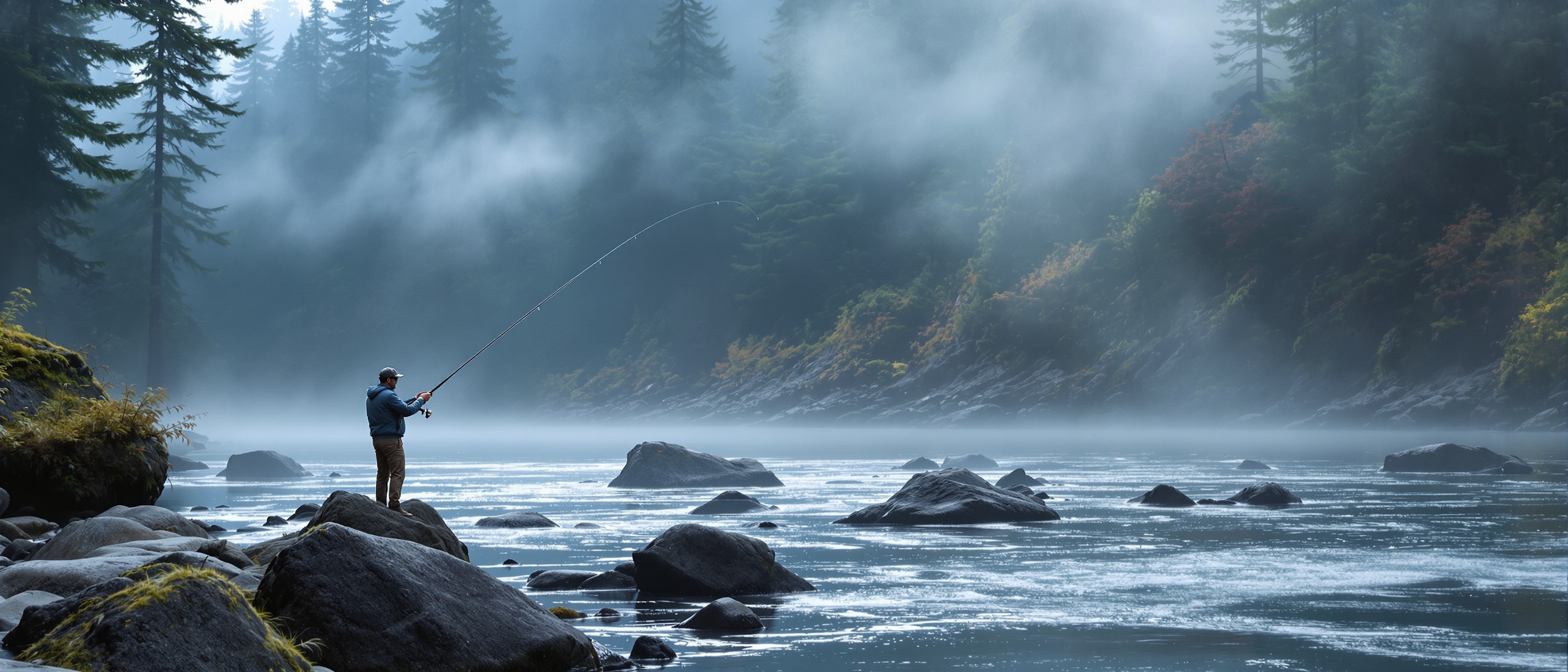
Step 1: Find the Right Shore Spot
Salmon aren't everywhere on a river bank — they hold in very specific places. Deep pools below riffles, the inside bend of a river curve, and the tail-out of a pool are where salmon rest during their upstream migration. Your job is to get your bait in front of a fish that is holding still.

- Look for the transition from fast water to slow: the tail-out of any pool holds resting salmon.
- Deep slots along cut banks are prime — salmon hug the bank in slower water.
- Below natural obstacles (big boulders, logjams): salmon stop to rest in the slack water downstream.
- On the Great Lakes tributaries: focus on the first deep bend below a rapid — salmon stack there.
- On the Sacramento River: look for gravel-bottom pools 4–8 feet deep with moderate current.
Common Mistake
Standing on the bank and casting into fast white water. Salmon don't hold in heavy current — they burn too much energy. Find the calm water adjacent to current, not in it.
Pro Tip
In the Pacific Northwest, scout your run at low water in late summer before the fish arrive. Mark the deep holes, boulders, and current seams on your phone. When October flows bring salmon in, you'll know exactly where to stand before the sun comes up.
Step 2: Rig Up for Shore Salmon
Shore salmon fishing requires heavier gear than most freshwater fishing. A running king salmon is a violent, powerful fish. In the Pacific Northwest, we use 20–30 lb braided main line with a 15–20 lb fluorocarbon leader. On the Great Lakes tributaries with coho, drop to 12–15 lb line.
- Pacific Northwest Kings: 9–10.5 ft medium-heavy rod, 4000–6000 spinning reel, 30 lb braid.
- Great Lakes Coho and Chinook: 8.5–9.5 ft rod, 3000–4000 reel, 15–20 lb mono or braid.
- Sacramento River: 8.5 ft medium-heavy rod, 20–25 lb braid + 15 lb fluoro leader.
- Leader length: 18–24 inches of fluorocarbon between your main line and terminal tackle.
- Connection: Palomar knot on both swivel-to-braid and hook-to-leader.
Common Mistake
Using freshwater bass gear for shore salmon. A 3000-size reel with 10 lb line will not stop a 30-lb chinook. The fish will spool you in under 10 seconds. Match your gear to the fish — not to the cost.
Pro Tip
In the Pacific Northwest, we use heavier line for shore salmon than most guides recommend. When a king runs 80 feet of line and turns into the current, the pressure on your tackle is extreme. 30 lb braid with a 20 lb fluoro leader gives you the margin to fight the fish — and the riverbank obstacles — without losing either.
Step 3: Bait or Lure — Pick Your Weapon
Shore salmon anglers have two main approaches: drift fishing with bait (roe, sand shrimp, or cured eggs) or casting and retrieving hardware (spinners, spoons, or jigs). Both work. Local conditions and time of season determine which is more effective.
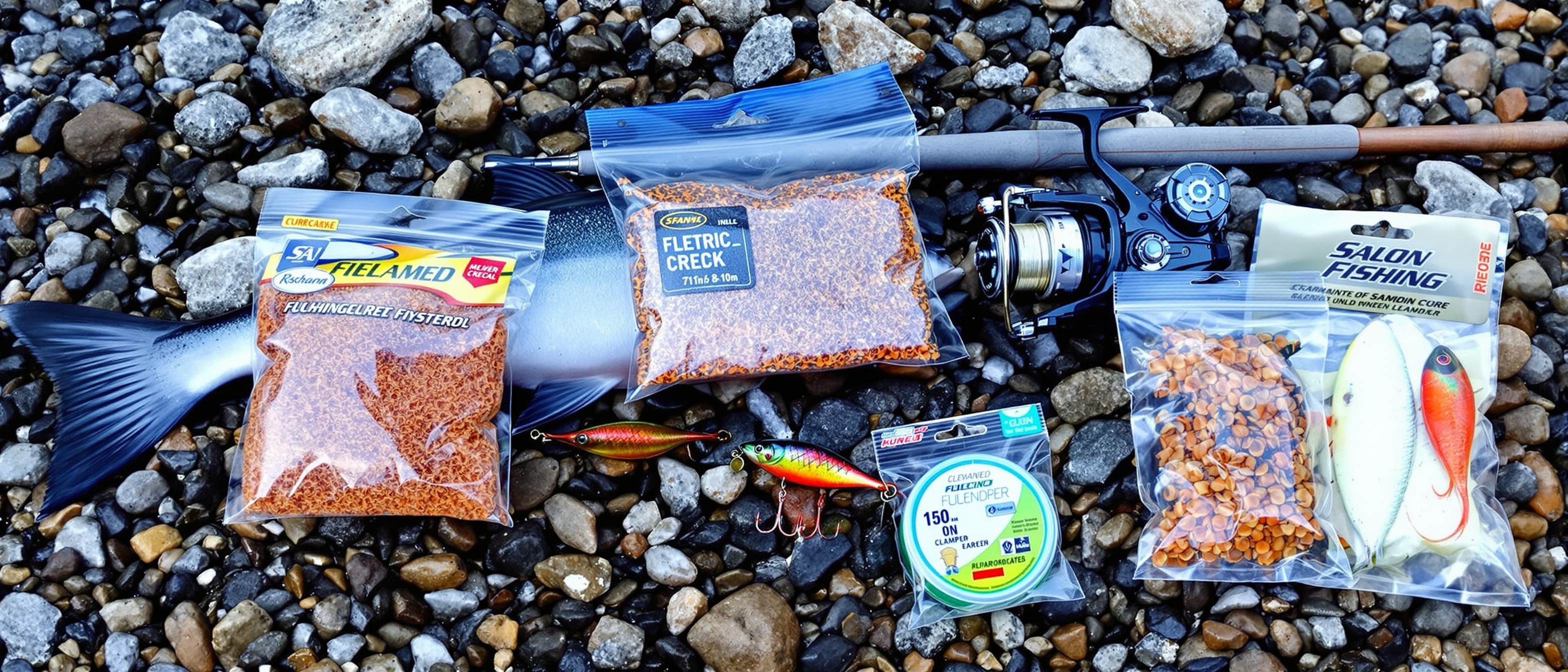
- Cured salmon roe (eggs): Most consistent bait on Pacific Northwest rivers. Drift it along the bottom with a pencil sinker.
- Sand shrimp: Deadly on Sacramento River and Northern California rivers. Use whole or half on a single hook.
- Blue Fox Vibrax Spinner (#4–#6): Cast upstream and retrieve at a speed that keeps the blade spinning. Especially effective on coho and Great Lakes salmon.
- Kwikfish plugs: Best for back-bouncing from shore on the Sacramento. Wrap with sardine for scent appeal.
- Marabou jigs (white or chartreuse): Productive on Great Lakes tributaries in rivers with good visibility.
Common Mistake
Using roe in low, clear water. When the river is crystal clear and low, roe in bright orange visibility eggs looks unnatural and spooks fish. Switch to natural-colored sand shrimp or small spinners in clear conditions.
Pro Tip
For catfishing after a heavy rain (similar murky water principle): salmon in murky river conditions after winter rains hit bait by scent more than sight. Use something with strong scent — cured roe in deep red or purple color, or whole fresh sand shrimp. The smell cuts through muddy water when visibility is zero.
Step 4: The Drift Presentation
For bait fishing, drift your offering through holding water at the same speed as the current. The bait should tick bottom occasionally — salmon feed low in the water column. Cast slightly upstream, mend your line immediately to avoid drag, and follow the bait with your rod tip as it drifts through the zone.
- Cast at a 45-degree angle upstream from your position.
- Immediately mend line upstream to eliminate bow — let the bait drift naturally.
- Hold the rod at 10 o'clock and follow the drift downstream with your rod tip.
- Feel for two types of takes: a hard thump (aggressive bite) or the line going slack (fish picked up bait and swam toward you).
- Set the hook with a sharp sweep upstream — not a violent jerk.
- Tighten down your drag before the set — salmon will run immediately after hook-up.
Common Mistake
Not mending the line after the cast. Bow in your line creates drag that pulls the bait off the bottom and out of the strike zone. Salmon holding near the bottom won't chase a bait being dragged unnaturally through the current.
Pro Tip
Great Lakes tributaries in October–November see massive coho runs in sometimes brutally cold water (40–48°F). The fish are active but sluggish — slow your drift down. Use a slightly heavier pencil sinker to keep the bait bouncing bottom and extend the drift through the best holding water.
Step 5: Fight, Land, and Handle Salmon Properly
A fresh salmon from the Pacific or Great Lakes is a powerful fish. The fight from shore requires patience — never horse a running fish. Keep steady pressure, let the drag do its job, and work the fish toward shore only when it gives you line.
- When the fish runs: keep your rod tip high and let the drag provide resistance. Do NOT reel against the run.
- Gain line only when the fish stops running or turns toward you.
- Keep the fish's head angled toward you — don't let it turn broadside in current.
- For landing without a net: tire the fish completely before attempting to lip or beach it.
- If you have a net: keep it submerged and lead the salmon headfirst into the net.
- For catch and release: keep the fish in the water, remove the hook quickly, and hold it facing upstream until it swims away strongly.
Common Mistake
Pumping and reeling against a running salmon. This either breaks the line or tears the hook out of soft mouth tissue. Reel only when the fish gives you line. Patience wins every salmon fight.
Pro Tip
In the Pacific Northwest, many rivers require barbless hooks for salmon. Pinch the barb down with pliers before rigging. Barbless hooks actually penetrate more easily on the set — and they release cleanly for catch-and-release without injuring the fish.
Pro Tips from The DU Tech Team
In the Pacific Northwest, we use heavier line for shore salmon than most guides recommend — 30 lb braid with 20 lb fluoro leader. When a king runs 80 feet and turns into current, lighter gear fails. The riverbank has boulders, logjams, and undercut banks. Overbuilding your tackle is never a mistake on Northwest rivers.
In Great Lakes tribs, the fish are stacked but wary from pressure. Early morning (5–7am) before other anglers arrive is your best window. Fish the same run you scouted the evening before. Consistent presentation in the same slots will eventually trigger a fish that ignored 50 casts.
The Sacramento fall run peaks in August–September at Red Bluff. Local guide boats fill every good hole by 7am. Beat them by launching your kayak or wading in by 5:30am and positioning in the prime tail-out before guides arrive. Shore anglers who know their spots consistently outfish boat anglers who don't.
Ready to Hit the Water? Check Your State Guide First.
Regulations, license requirements, and season dates vary by state. Check before you go.